The things we engage with in our media and the things we enjoy do shape our belief in what is possible in the future.
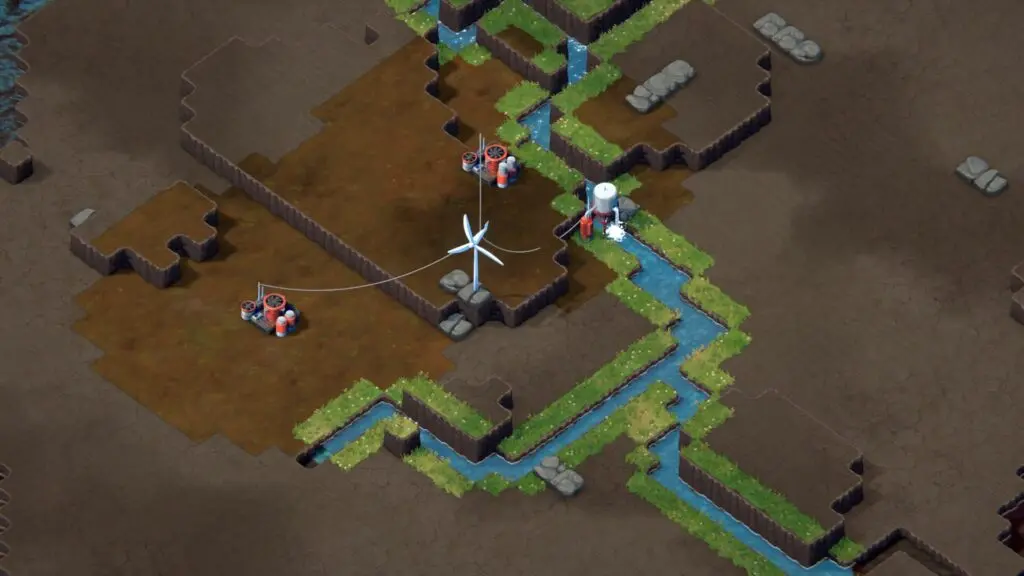
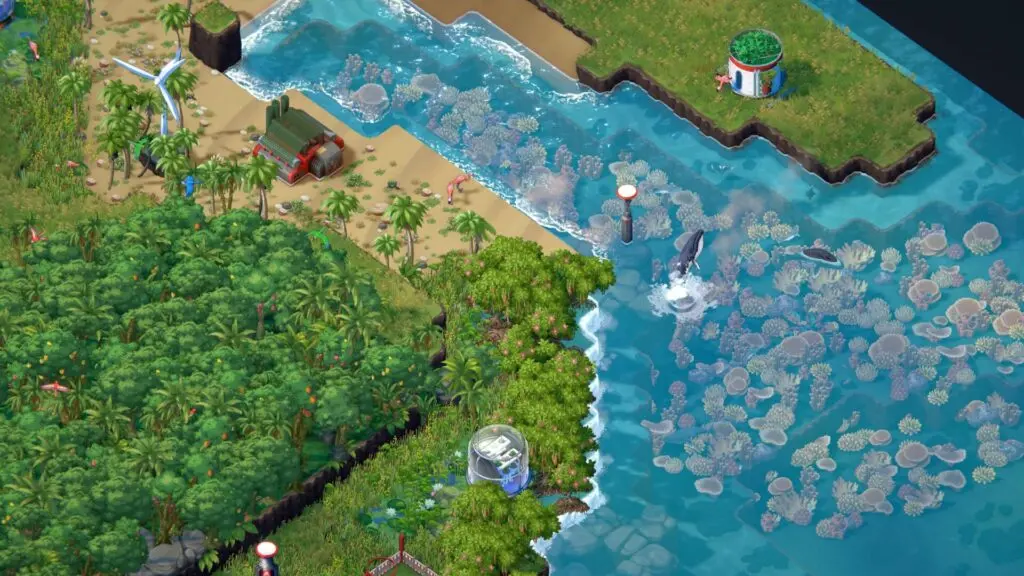
Terra Nil is a nature-restoration video game. Upon starting it, the player is greeted by a vast toxic wasteland where a guidebook with instructions on restoration is found. The player’s task is to strategically place different types of heavy machines and begin the restoration process: to detoxify the land, plant grass, and restore more and more ecosystems. As wildlife emerges, the player has to make sure they have suitable habitat. Finally, when achieving a thriving, balanced landscape, the player is required to dispose of the machines and fly away, leaving the natural world to its own devices.
The name of the game is balance, and every aspect depends heavily on the other: some animals depend on the proximity of other animals; some ecosystems require specific climate conditions or a certain type of soil. Winning a level is only possible when the different aspects of the environment are evenly and strategically placed. The smarter you work, the faster nature itself starts taking over: the animals help restore the ecosystem, migrating birds return, and moss builds over the rock faces.
I am not a gamer; I came across the game on Netflix and fell in love. Playing yields a deep sense of satisfaction, reassurance and hope. In many ways, the values that the game seems to promote align perfectly with TiME’s: agency, hope and action driven by optimism. Sam Alfred, the lead developer of the game for the South African game developer Free Lives, kindly agreed to talk to me about the game and the role of video games and entertainment in the mission to drive change.
(The interview has been edited for clarity and shortened slightly.)
Noga: How did you come up with the game?
Sam: We do these things in the game development industry called game jams, which are incredibly short, focused game-development marathons, where you start with nothing and end up with a game. Terra Nil was made for one of these called Ludum Dare, which is one of the oldest game jams in the world. It’s held twice a year online and in 48 hours you have to make a game from scratch. The theme was “start with nothing.” Back then, it was just me working on it; I started the original prototype that turned into the full version. It ended up getting some interest online; we improved it by adding in biodiversity, recycling, and then eventually, we had the full version of the game.
I’m curious about how the idea of “start with nothing” brought you to conservation, because usually we think about this the other way around, right? We have nature and we have to conserve it.
Right. The games I like making are often thinking games, or strategic games, rather than action games. Games in the strategy-game space often treat nature as a resource. In a hypothetical city-building game, you want to build your city, so you chop down the forest to harvest the land and build the houses, you have to mine minerals, etc. Nature is the resource. For me, the original idea of “start with nothing” was about inverting that. What if nature is the goal instead of the resource? The idea of taking this barren piece of land and bringing life back to it is incredibly satisfying, and I think this is where it came from. I’ve learned a lot about the natural world through the process of making Terra Nil, and one of the things I have learned is that wastelands don’t really exist on Earth, almost everywhere there is some life. But this is where it came from.
Is this gamified exploitation something that you were been thinking about before, when you were playing the city-building games? Were you bothered by the exploitation aspect of it?
When I first started Terra Nil, when the team first started working on the game, it was more unconscious. I think it was for me coming from a place of loving the environment. I spent my childhood all over the country, and I still love to… be in the mountains and be alone, away from people and away from civilization. That was what I was aware of in the beginning, but as we developed this game it became more and more obvious that there is a big problem with games in this genre. It’s almost an invisible problem to most gamers.
What if nature is the goal instead of the resource?
There is a lot of talk about games promoting violence and sexism. Are you trying to turn games into a positive force? Or do you think games and activism are distinct things, and Terra Nil is more about illustrating something, helping people cope with their feelings?
I think Terra Nil is that [the latter]. It is a meditative, relaxing, healing experience for the people who play it. Very often, we get told by players that it reduces their anxiety — they come home after a bad day at work and then they play Terra Nil and they feel better. So it is that, but it is also… I’m not really making an argument or qualified to speak about that, but I do think that the things we engage with in our media and the things we enjoy do shape our belief in what is possible in the future. You just have to see what’s happening in the US in the last few years with all these tech billionaires creating technologies based on science-fiction books that they read when they were teenagers — often very dangerous, scary technologies that are in the science-fiction books, which the authors are saying “please don’t make this.” I guess that’s the power of imagination. I think Terra Nil, hopefully, provides that as well; if someone plays it, it can be inspirational and help them imagine something better. So many of the games we see today are dystopian, cyber-punk futures where everything is bad — the logical extreme of late capitalism. I think there is real value in trying to imagine a more positive world.
This is part of TiME’s mission so I loved that you said this in these words. Part of what we do is trying to empower change from positivity, from positive action, and I think this is a lot of what you do in Terra Nil as a player, you actually act and see the change happening as you play. Have you had criticism in the sense of “well, you are making it seem too easy to create a change”?
Yes, we’ve had that criticism before. I think this is a fair criticism. There are many oversimplifications in the game, and it’s never been our intention in making this game to make light of the difficulty and the hardship that people have to go through to make change in the real world. It’s much more about trying to inspire people to say, “hey, I really liked Terra Nil and there was this interesting thing, let me learn more about it in the real world.” We have definitely got that criticism, but the game is… it’s a game. It was never originally created to be educational, it wasn’t designed that way, it was designed to be an enjoyable experience that grew beyond that to express these themes. I think there is value in doing that even if it has problems, and it definitely has problems.
But, on the other hand, I think you’re not overly romanticizing it. You have mentioned before the design process, where you started with more Studio Ghibli-style, romantic type of artwork for the machines, and then changed it to be a very industrial type of machinery, that purposefully looks out of place in the natural world.
Yes, that was a big decision point for us in the beginning, because on the one hand, you’re trying to create a contrast between the industry that caused all the problems and the change that the player creates. So what’s the opposite of the industry and the wasteland? That’s why we originally tried the Ghibli-style look of the game [see example here]. I do think the idea that you can solve some of these incredibly massive and intricate problems by just having romantic notions of getting a few groups of people together and building a thing… Not that that’s not valuable, and not that that can’t make a change in the local area, but these problems are so vast.
During the COVID lockdowns, there was a Malaysian guy whose blog we read. He was writing about Terra Nil and also about the phenomenon that happened all over the world, where the environment improved. In lots of different cities, the air quality improved and animals started coming back. He was basically talking about how there is a problem caused by this massive industrial machine, this industrial scale, and you need an industrial scale to solve that problem as well. And that was hugely influential on us and helped us ground the game a little bit more and become less fantastical about romantic notions of what you can do with two nails and a hammer….
It’s very interesting that you’re talking about an industrial-sized solution, because on the other hand, the game is a lot about individual agency. So in a way, it’s contradictory, but I think you’ve found some way to integrate those ideas.
Yes, it’s almost like in the game you’re the agent of the industrial-sized solution. Although you play on a small-ish piece of land, we then extrapolate to the restoration of a piece of a continent or even a whole continent…. You’re right, the whole game, the whole design, has this tension. It’s about trying to walk the line.
Illustrating this tension is important in itself because it really does exist, right? We’re saying yes, we should recycle, but we also know that recycling is a drop in the ocean. So it’s really the tension that a lot of people who care about the climate and the environment feel on a day-to-day basis.
Yes, it’s very disheartening to think, “yes, I can do this, but what good does it do?”
You mentioned that some parts of the game are less fantastical and more rooted in science. Have you been talking to scientists to work on this? Which of the machines are more realistic?
The game takes place across multiple geographical zones. When we would start making a new climate zone, like a polar region, we would do some research about what are real-world land-restoration techniques that exist in this space, and can we somehow use those in the game. There are a couple of things in the game — less than I would have liked, because, as I said, this is a game, and making it fun was our primary goal. I would have loved to include more real-world examples, but the ones we did end up including were things like coral nurseries, where you end up seeding the coral on land in a nursery and then you put it in the ocean to help restore the reefs. The most famous part of the game — the fires burning the fynbos [biome of southern coastal South Africa] — is also inspired by reality [the player creates a fynbos ecosystem and burns it to create soil for planting forests].
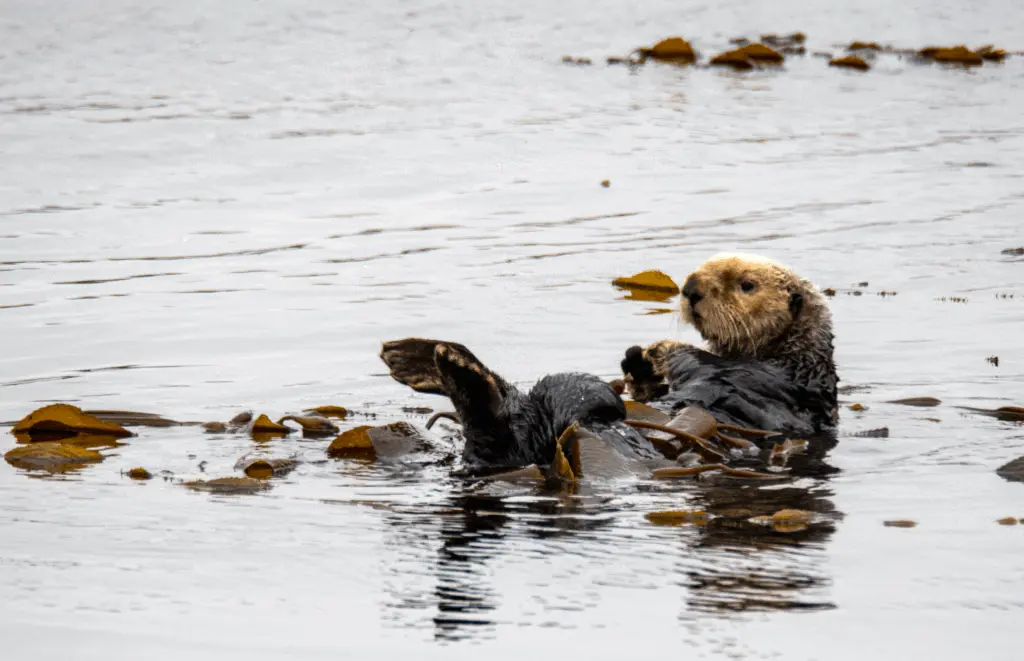
I would have liked to do more on kelp forests; I remember doing a lot of research on kelp forests and learning about the role of sea otters eating purple sea urchins, which would then allow the rocks to be free for the kelp to hold on to. In many areas, increasing the density of kelp forests can be as simple as trying to protect the local sea otter population.
Thinking about the fynbos, the whole phoenix-like process of creating something, restoring the land part by part, then burning it and creating something else, that’s a lot of why conservation is so important. Recreating land can take even thousands of years; for example, primary forests can take a very long time to form.
As a player it’s very satisfying, but it’s also very disheartening to create something and then to burn it. I was wondering from the perspective of a gamer, is this something that is usually done in this type of game: building and then destroying to create?
No, absolutely not. A lot of what ended up happening as we were creating this game, all of the conventions of the genre went out of the window. Progress in a game like this, in a strategy game, in a building game, is usually pretty much always forward. You don’t ever have setbacks. Not in a real, fundamental way, because so much of what makes these games fun is the sense of ownership from creating your city, your factory, your town, your transport network — it’s yours. If the game undoes your progress, it feels very unpleasant. It’s very unusual in the genre, both burning down the progress to create something new, but even more than that, the recycling [the final part of a level in Terra Nil, in which the player removes their tools and machines from the land] that happens where you have to remove all of your tools, all of your building, all of your machines, before you leave the environment. People have struggled with that more than perhaps the burning. It feels like you’re undoing your progress. But I think it’s really important. I think this is one part of the game where it’s not that fun, where it being a game didn’t take precedence. Where the message of the game ended up trumping the desire to make it fun. We did make a compromise, we made the recycling in the game very quick, you don’t have to spend hours cleaning up after yourself, but we wanted to include it as saying: even you, in your agency in the game, have been manipulating the natural world. So you need to leave it to its own devices.
You mentioned the primary forest, I know it as an old-growth forest, but it’s the same thing, I assume.
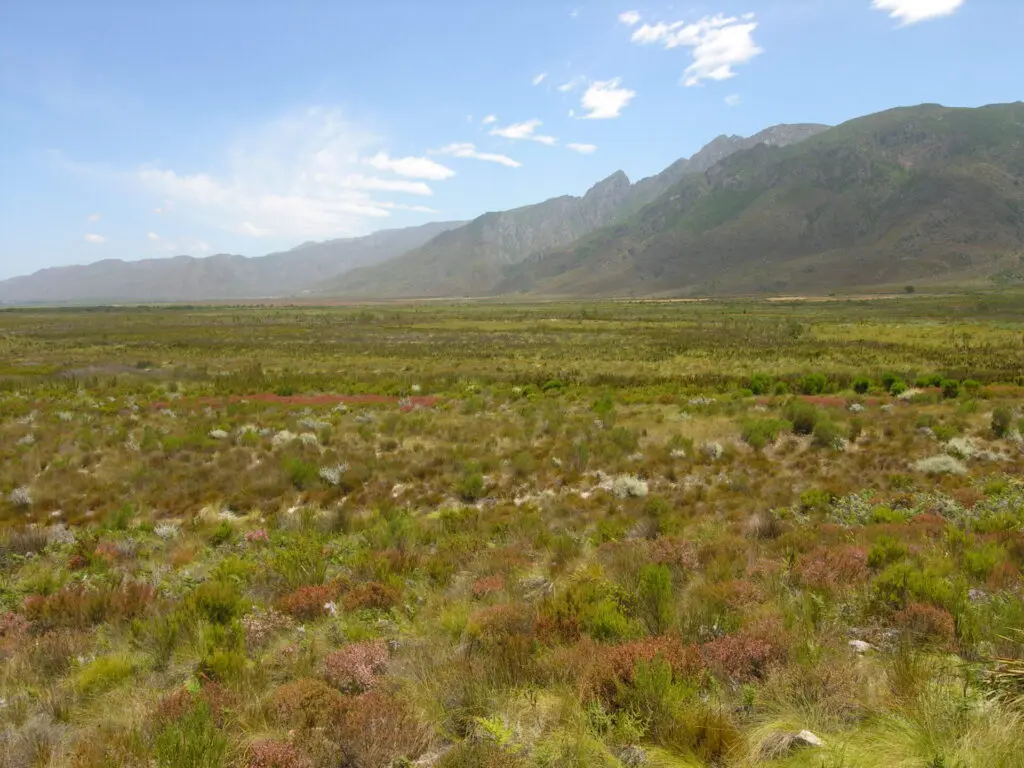
Basically what happens is that each stage, you have the… grass dying, then one type of trees dies, and the death of each stage prepares the soil for the next one, and this can take thousands of years. So when we burn a primary forest, it’s gone — for our lifetime.
Yes. From what I have read, planting brand-new forests can be much less significant than protecting existing primary forests, or even planting trees that can then form part of a larger forest that already exists is better than building new trees in the middle of a field.
Exactly.
And that’s another thing I learned in the process of making this game that I didn’t know before — I would love to have included it in the game, but because the game is all about starting with a wasteland, it wasn’t really appropriate. The idea of protecting primary forests and expanding on forests instead of creating new forests is something that stuck with me, and maybe I’ll make a new game about that at some point in the future.
I was wondering if this is something that can be gamified, because when you talk about conservation… You took a game, which is something goal-oriented, and made the goal creating balance — I think this is really innovative and interesting. But when the goal is maintaining balance, I wonder if you think it would be possible to gamify something like that.
That’s a very good question because so much of modern game design is about forward progression, even Terra Nil: you start with nothing and then you create an ecosystem, you create a balance, and then you’re leaving. There’s progression. And inherently, most tasks that require maintenance, doing the same thing over and over again, don’t usually end up making their way into video games, because generally, doing that kind of work is not fun. I’m sure there is a way. I don’t know how, not right now, but I’m hoping that in the next decade, games will come out that were inspired by Terra Nil but do something brand new that I never thought of. And I hope someone who makes one of those games would figure out a way to make this fun.
Do you think the game industry is going in this direction that you set up — of trying to think about nature in a non-exploitive way, or generally trying to be socially responsible?
I don’t think so. I think there is a groundswell — there are more games about this than ever before — but I still think they’re a tiny portion of the industry. I think they are very much entertainment-first.
Which is not necessarily a bad thing.
No, it’s not necessarily a bad thing. I do think the place where games can have the most impact is as entertainment products, as something you want to engage with rather than something you’re forced to engage with. Someone can create a fun game and then have a Trojan horse of a message in the game.
Another thing I wanted to ask about, but I think you’ve answered it: are games a good medium for creating change? I think what I heard you saying is that entertainment is a good way for that, because we think and we do what we engage with, but it has to be something we want to engage with.
I think that’s the key thing. Of course, the industry is massive. There are definitely people who start with the goal of “I’m going to make a game that’s going to change the world in these positive ways,” but I think that if this is your goal in the beginning, the chance of success is very low, because a game has to be fun for people to want to play it. Because of the way the games market works, because of the way social-media algorithms work, there has to be a reason why someone wants to share this and an algorithm wants to share it. It’s perhaps a bit cynical on my part, but I do think that’s the way to make games that can reach a large audience: to sneak your message in, when the game is really fun.
I don’t think it’s cynical, actually. You mentioned anxiety earlier… and entertainment has always been a key part of human life…. Like you mentioned, we’re used to dystopic books like Jurassic Park, which I assume is what you were hinting at [Sam nods], that show us what could go wrong. And then this is what sticks with people. But if we engage in what could go right, this is what sticks with us….
You have said before that you didn’t want to tell the apocalyptic story of how the wasteland came to be, as there is something very intuitive about seeing this wasteland and feeling that you want to restore it. A lot of games tell a story — and in a way, you do tell a story, but you take an existing story. You don’t have to tell it, people know it, people live it. And you put them in the middle of a story that already exists. Is this something you did purposefully…?
Going back to the original-original version of the game, it’s a very powerful motivator in the abstract: giving someone a blank canvas and paint, and they know what to do. And if on top of that you add a theme where the canvas is bad, and what you paint it with is good — you’re right, it’s probably the single strongest part of the game’s design: the game has a narrative without having a single word of story…. I think this is also a way in which games are a unique medium for engaging with the audience, because unlike every other kind of media, the player is an active participant, and the actions they take can help tell the story. I think that’s part of where the empowerment and the agency come from as well: you’re involved in the story, you’re not just watching this wasteland come back to life. That would be satisfying, but it’s so much more satisfying when you’re the one causing it.
There’s another bit of design that I’m quite pleased with, where towards the end of a level, you get the local climate restored, and it rains. And then the rain fills in all the little gaps that you missed, and it helps you get towards the goal and complete the level — but not just to complete it, but to make it beautiful and green and vibrant everywhere. That’s a dialogue between the player and the game. The player is talking through their actions, they’re telling the story of restoring the wasteland, and then the game has an opportunity to speak back to the players.
Have you been consulting with scientists, conservationists of any kind?
Overwhelmingly, it was us looking it up and doing our own research. As the game was growing we had more opportunities to engage with real scientists. When we launched the game, we did a campaign with a local wildlife-protection agency, where we donated a portion of the profits of the game to them, and we did a social-media campaign with them. Recently — in fact just yesterday [this interview took place on April 30] — we launched an initiative around adopting African Penguins, because the African Penguin is Endangered and there are only a handful of colonies left in the wild…. We launched this initiative with Sanccobb, a South African organization, that allows adopting a penguin as a way of donating. We launched the Terra Nil Waddle, we adopted three penguins, and we are challenging other companies to adopt more [since the interview, Free Lives have adopted 16 more penguins and other companies have joined in].
I imagine donating is not easy when you’re a small-scale organization. And in a way, you’re telling bigger corporations, if we can do it, you can do it.
That’s the hope, let’s see if it works.
It also shows that this process of doing something fun, having this Trojan horse and still getting it to be real and successful, I think this is a wonderful message. What kind of projects have you been involved with before — had you done anything biodiversity-related earlier?
I did my honours thesis on ecosystem simulations, [as part of a] computer-science honours, but other than that it’s really just been my interest and love for the natural world that ends up coming through some of the things I make — but not always, because as I mentioned, fun is usually the goal….
I feel like you’re saying a bit apologetically that fun is the goal, but it really reminds me of TiME’s education program. The educational team always emphasizes exactly that: we want it to be fun, we want it to be engaging, we want children to want to participate in this….
I think it has worked in Terra Nil’s case.
One more thing I wanted to ask is about the name: where does that come from?
My university degree was a very strange combination: I studied computer science and economic history, and one of the things I remember studying was the idea of terra nullius, “no man’s land.” That was a legal argument for why colonists could come into South Africa or Australia and not recognize the locals as owning land — because they were nomads, or they were hunter-gatherers…. So I originally thought I’d call the game terra nullius, but rather than getting caught up in all that history, my wife suggested that I changed the name to Terra Nil, and that’s what I did.
Thank you so much!
This has been really interesting, thank you!
You can play Terra Nil on Nintendo Switch, PC or Netflix.
We thank Free Lives for gifting TiME’s educational team a copy of the game!