I started training my dog at the same time as I was practicing cognitive-behavioral therapy (CBT) for my arachnophobia. Gradual, controlled exposure to distressing stimuli, paired with a positive experience, had been the name of the game for both of us: my dog got a treat when he sat still in proximity to terrifying Labradoodles, and I got to look at his picture while exposing myself to photos of eight-legged menaces. We were clearly both engaging in CBT!
Before my husband and I adopted him, Pan had been briefly adopted and then returned to the shelter as a very young puppy. When I first took him in, he was especially afraid of people in yellow safety vests; after several interactions with a very kind municipal employee in a vest, his anxiety subsided. His evident sensory aversion to mud and puddles, as well as preference for eating his kibble from only one side of the bowl, led me to suggest, half-jokingly, that he may have obsessive-compulsive disorder (OCD) or a degree of neurodivergence.
Am I overly anthropomorphizing him? Can animals have psychopathologies just like humans? There is no clear answer, yet the debate seems centered not on the question of whether animals can experience a broad range of emotions, including acute distress — which hardly anyone who has ever intimately known an animal could deny — but on whether this distress can be classified the same way as human mental disorders and illnesses. This is contested especially by those who wish to learn from animals about human mental health: if a dog’s depression is categorically different from a human’s depression, it is not helpful to call it depression and perform experiments on the dog for human benefit. But if what we care about is animal welfare, does it matter?
Biologist and ethologist Marc Bekoff, in his book The Emotional Lives of Animals, discusses the odd duality we sometimes exhibit. On the one hand, when interacting with animals, we clearly see the range and depth of emotions they can experience. On the other hand, in the name of science, many are quick to concede that we don’t actually know what they feel. Bekoff writes of a colleague who was happy enough to share stories about his dog being jealous of the attention the colleague was giving his daughter, and yet, in a professional debate, clarified that the dog only acted as if he were jealous.
Sure, the dog can’t tell us with words, but following this line of argumentation, how do I know other people don’t speak and act as if they experience distress when they don’t? I will never truly be inside their heads, but I don’t believe myself to be the only feeling human, and I don’t believe humans to be the only feeling species for the very same reason.
I doubt, as many of you surely do, that a dog experiences existential dread or intrusive thoughts regarding whether he buried his bone well enough. It is also believed that schizophrenia, for example, is uniquely human. It may well be that behaviors that appear identical to the symptoms of human mental disorders stem from an entirely different source. Yet, these behaviors themselves show mental distress.
The debate about animal mental health usually focuses on animals in captivity. Yet, habitat loss is certainly another distressing factor, resulting from reduced living space, increased traffic and heightened competition over food in the remaining habitat , as well as more and more dangerous encounters with humans. Thus, the evidence for non-human animals’ mental-health concerns contributes yet another argument to the case for biodiversity conservation: let us set the stage for the well-being impact of habitat loss.
In captivity
Animals are kept in captivity for various reasons. These include the exotic pet trade and entertainment, but also conservation, with or without the intention to rewild. Some species, like the Guam Kingfisher and Northern White Rhinoceros, are officially declared Extinct in the wild: the only living ones are in captivity. Rewilding is extremely risky, as it could mean the end of the species, and attempts at genetic intervention using cryo-preserved tissues to revive these species carry heavy moral conflicts surrounding the tension between conservation and intervention. Would such intervention reintroduce the same species, or a distinct one? Is it even right to do so before we have fully addressed the root problem: the human activity that causes extinction? What would be the impact on other wild animals, and are we playing dice with the universe?
Unfortunately, captivity carries its own cost. We know most about animals in captivity: we see, observe and track them day by day. The suffering they go through enlightens us not only on the importance of conserving habitat to save more wildlife from captivity (or death), but also on the very fact that animals can and do suffer from mental illnesses.
Stereotypies are repetitive behaviors in animals. Some horses engage in cribbing: grabbing a horizontal object with their upper teeth, arching their neck and gulping for air. Other horses weave, a movement pattern of swaying their head and shifting their weight between their legs. They can engage in this for hours every day, sometimes leading to weight loss and dehydration. As it turns out, horses respond to SSRI medication like Zoloft and Prozac the same way humans with OCD do, suggesting that these behaviors are compulsions. While the horse cannot tell us whether, and what, obsession drives this behavior, if it looks like a compulsion and responds to medicine like a compulsion, it seems reasonable to name it a compulsion. These behaviors are often called barn vices, because they occur primarily when horses are confined to a barn (or perform or race), and rarely in the wild.
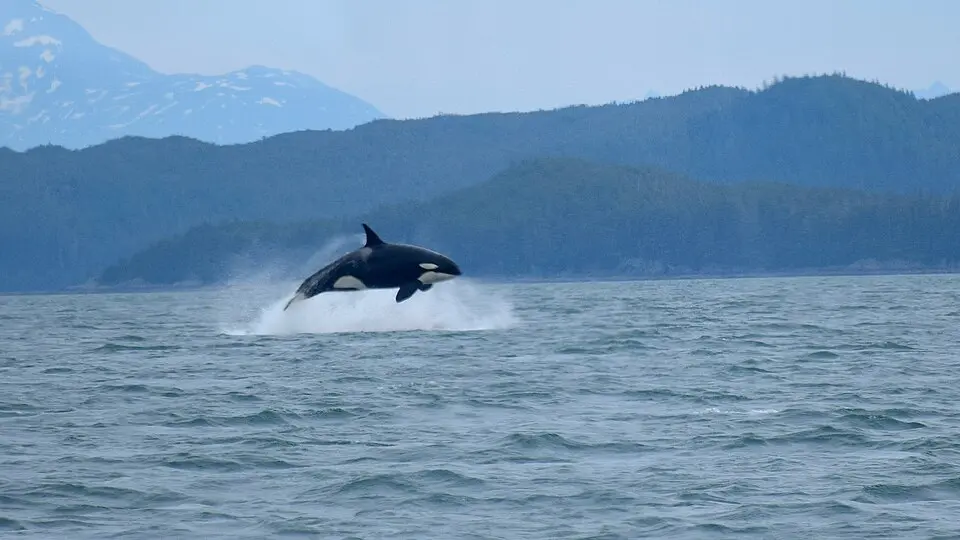
In 1980, an Orca named Hugo, captive at the Miami Seaquarium, died of an aneurysm. This was a result of his tendency to slam his head against the tank. This type of behavior is not known to occur in wild Orcas, and Hugo is not alone in exhibiting self-harm: many captive Orcas chew on concrete to the point of breaking their teeth or bang their chins against hard surfaces to the point of injury. The damage may look different from that in humans who self-harm, but is the type of behavior truly different? Whales and dolphins in captivity have less than 0.0001% (one millionth) of their natural habitat space, even in the largest aquariums, according to the World Animal Protection 5th edition of the Case Against Marine Animals in Captivity Report. Can we genuinely be surprised these mammals might be distressed and exhibit a kind of self-harm?
Zoochosis has been adopted as the term for various behaviors displayed by zoo animals, including pacing and swaying, which zoo visitors often dismiss as “boredom.” We know that boredom can be healthy to a certain degree, but even though the response to being permanently locked in a small space that does not fit an animal’s natural habitat may indeed be classified as boredom, it certainly is far from a healthy or even benign boredom. In her book Elephants on the Edge, psychologist and ecologist G.A. Bradshaw asks whether, upon seeing a human prisoner pacing across their cell, we would regard it as boredom or a stress response, and why the reaction to animal captivity is so different.
The Elephant Sanctuary in Tennessee provides a home to older elephants who have survived years of abuse in circuses or zoos, and their stories are heart-wrenching: many years of being isolated, confined in small spaces, chained, and forced to perform for an audience. When they arrive at the sanctuary, usually after an injury that makes them a liability or due to violence, they display many behaviors similar to those exhibited by people with complex post-traumatic stress disorder, who include abused children, captives and prisoners of war. They might jump at every sound, refuse to leave their barn, display violent outbreaks, or be devoid of any sign of joy.
Their rehabilitation is inspired by the same principles applied to help human survivors: allowing them to be in control, helping them express their needs and desires, and forming a community. The majority of elephants at the sanctuary were born in the wild but will never return there. Some, like the Asian Elephant Billie, are in their 60s, having arrived at the sanctuary after decades in captivity. Rewilding is not an option for them.
Some captivity conditions strive to provide a healthy environment. The elephants that grow old in the Tennessee sanctuary surely manage to enjoy their life. Yet, in Bradshaw’s words, the question is not only what kind of life they have — but what kind of life they could have had.
In the wild
In The Emotional Lives of Animals, Bekoff writes of a coyote named Joe that he observed in the wild that could be seen seemingly sulking, and then instantaneously break into a carefree, joyful run. A wolf named Lucy would act just like the other wolves most days, but then appear to be very down for no obvious reason. A coyote pup named Harry did not understand how to play as his littermates did. If these behaviors were displayed by human children or adults, we would likely consider whether they have some difficulty and need help. When they are displayed by canines, we find it much more difficult to suggest that they have a mood disorder or neurodivergence. Just like in some humans, Joe, Lucy and Harry seem to experience these conditions from a young age, and not necessarily due to an external stressor.
Yet, external forces can affect mental health. When a group of people experiences the systematic destruction of their home, we expect that their mental health will be impacted. If animals in captivity experience PTSD and mood disorders, and if wild animals occasionally do, too, what happens to them when their habitats are continuously under threat or even destroyed?
In Kenya, as farms are built near or on African Elephant migration routes, the elephants are forced to navigate a new terrain, often with less forest cover. The proximity between the human settlements and the elephants also creates conflicts: elephants can flatten crops and harm or even kill humans, who often shoot in retaliation. Sometimes young calves get stuck in wells; the herd attempts to rescue them, but occasionally they fail and must abandon the calf and proceed in their migration to avoid predators.
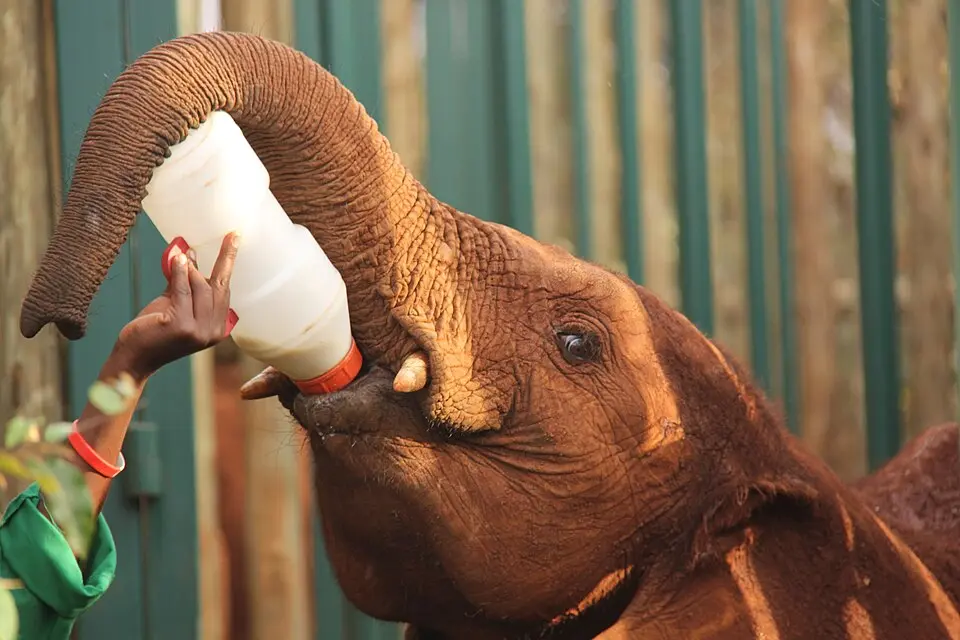
Sheldrick Wildlife Trust is a rescue organization based in Nairobi. Since 1977, they have rescued, rehabilitated and rewilded many orphan animals — mainly elephants but also rhinos, hippopotamuses and giraffes — that lost their herd in tragic circumstances. Zongoloni, for example, was found with her injured mother. The mother was shot by poachers, and when she collapsed, the young calf remained by her and tried to chase away predators. At the age of around 19 months, when elephant babies still depend on milk, Zongoloni was in physical and emotional distress. She was rescued, but her mother, unfortunately, had to be euthanized.
Zongoloni’s integration into the elephant nursery was not smooth: she was aggressive and found it difficult to fit in with the other young elephants. Fortunately, unlike the older rescued elephants of Tennessee, Zongoloni was young, her trauma was brief, and she now lives again in the wild. Similar stories repeat for many of the orphaned animals rescued by the trust. In all of these stories, rescued orphans play a part in the rehabilitation and integration of newly rescued calves, forming a supportive community and fostering recovery.
We can only imagine the emotional consequences for the surviving elephants after witnessing poaching or being forced to abandon their young. When habitats shrink, animals that lose their homes are forced into greater proximity with one another, other species, and humans. This very likely leads to emotional distress and — since mental health affects the body, making one more susceptible to infections and diseases — could potentially also impact the survival risk of species in the wild, including endangered species.
In protected natural habitats
Much like humans, non-human animals can go through a wide range of experiences and can be born with many different dispositions and personalities. Some are more or less resilient to stressors; some will go through life with relative stability, while others will encounter more distressing events. There is nothing we can do to change this fact.
Yet, it is in our power to attempt to decrease the amount of distressing and traumatizing events caused by humans. In addition to the legal battles against poaching, wildlife trafficking and hunting, we can work for habitat conservation. A safe home — be it a space to roam, migrate, hibernate, climb trees or watch Netflix — is a necessary condition for good mental health. The degradation or destruction of habitats increases the proximity between humans and animals, escalates conflicts between them, and exposes more and more wildlife to accidental harm (from man-made wells, roads and machines) as well as intentional harm (such as poaching or hunting). Every such case has a ripple effect, also impacting those who survive.
Although I have only discussed mammals so far, mental disorders are not unique to them: captive birds, for example, are known to pluck their own feathers when stressed, bored or anxious, in a pattern not unlike the human condition trichotillomania. Stress reactions are observed in bees. We know most about the animals that we keep in close proximity to us, but there is no reason to think that those animals we know very little about do not experience similar reactions.
Every individual animal, human and non-human, is a singular expression of what it means to be alive. We all share the same world and partake in the miracle of being: the suffering of one is intimately connected to the suffering of another. By supporting TiME and saving threatened habitats, we are taking another step in making the world healthier and happier for all.
Author: Noga Syon
Editor: Liat Radcliffe-Ross
Bekoff, Marc. “Do Wild Animals Suffer From PTSD and Other Psychological Disorders?” Psychology Today. Published November 29, 2011. Accessed July 2026. https://www.psychologytoday.com/us/blog/animal-emotions/201111/do-wild-animals-suffer-ptsd-and-other-psychological-disorders
Bekoff, Marc. The Emotional Lives of Animals : A Leading Scientist Explores Animal Joy, Sorrow, and Empathy–and Why They Matter. Novato, Calif: New World Library, 2007.
Bradshaw, G.A. “Elephant Trauma and Recovery: From Human Violence to Liberation Ecopsychology.” Pacifica Graduate Institute Dissertation, 2005.
Bradshaw, G. A. Elephants on the Edge : What Animals Teach Us about Humanity. New Haven: Yale University Press, 2009.
Carter, Nick. “Effects of Psy ects of Psycho-Physiological Str cho-Physiological Stress on Captiv ess on Captive Dolphins e Dolphins.” International Journal for the Study of Animal Problems 3:3 (1982): 193-198.
Dodman, Nicholas. “Obsessive Compulsive Disorder In Animals.” Veterinary Practice News. Published November 21, 2012. Accessed July 2026. https://www.veterinarypracticenews.com/obsessive-compulsive-disorder-in-animals/
Editorial. “Stereotypical behaviours.” British Horse Society. Last updated April 10, 2026. Accessed July 2026. https://www.bhs.org.uk/horse-care-and-welfare/behaviour/stereotypical-behaviours/
Fontenot, Robin L, Cathleen A Mochal-King, Saybl B Sprinkle, Robert W Wills, and Christine D Calder. “Retrospective Evaluation of Fluoxetine Hydrochloride Use in Horses: 95 Cases (2010–2019).” Journal of Equine Veterinary Science 97 (February 2021).
Jett, John, Ingrid N Visser, Jeffrey Ventre, Jordan Waltz, and Carolina Loch. “Tooth Damage in Captive Orcas (Orcinus Orca).” Archives of Oral Biology 84 (December 2017): 151–60.
Kalso, Reed. “Animal psychopathology.” EBSCO Research Starter. Published 2020. Accessed July 2026. https://www.ebsco.com/research-starters/psychology/animal-psychopathology
Layng, T. V., P. T. Andronis and I. Goldiamond. “Animal models of psychopathology: the establishment, maintenance, attenuation, and persistence of head-banging by pigeons.” Journal of behavior therapy and experimental psychiatry 30:1 (1999): 45–61.
Marino Lory et al. “An update on captive cetacean welfare”. PeerJ (2025): 13:e19878.
Melnychuk, Maiia, Mykhailo Zhylin, Nataliia Makarchuk, Kateryna Sakharova and Yaroslava Shven. “The Influence of Genetic Markers on the Development of Mental Disorders: A Systematic Review of Studies.” Journal of Pioneering Medical Sciences 13:3 (2024): 30-37.
Procenko, Olga, Jenny C. A. Read and Vivek Nityananda. “Physically stressed bees expect less reward in an active choice judgement bias test.” Proceedings of the Royal Society B 291:2032 (2024): 20240512.
Ringelestein, Anne. “The Saddest Show on Earth: The Endangered Species Act as Applied to Captive, Endangered Mammals in People for the Ethical Treatment of Animals Inc. V. Miami Seaquarium.” Villanova Environmental Law Journal 32:2 (2021): 303-331.
Young, Amy and Carrie Finno. “Weaving in Horses.” UC Davies Weill School of Veterinary Medicine. Published December 19, 2024. Accessed July 2026. https://ceh.vetmed.ucdavis.edu/health-topics/weaving-horses