Uri Shanas, TiME’s founder, visited one of the threatened habitats awaiting your vote, Mount Sagyaan, and shares his experience.
Let me try to describe the amazing time my wife, Irit, and I had with the Higa-onon people of Mount Sagyaan.
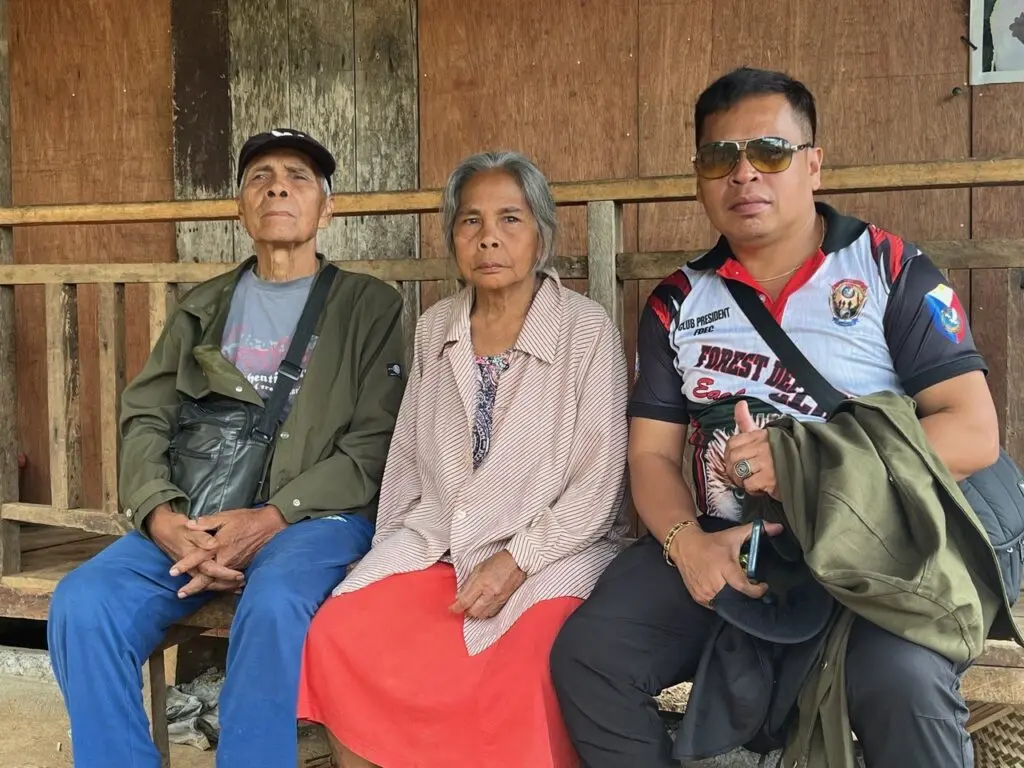
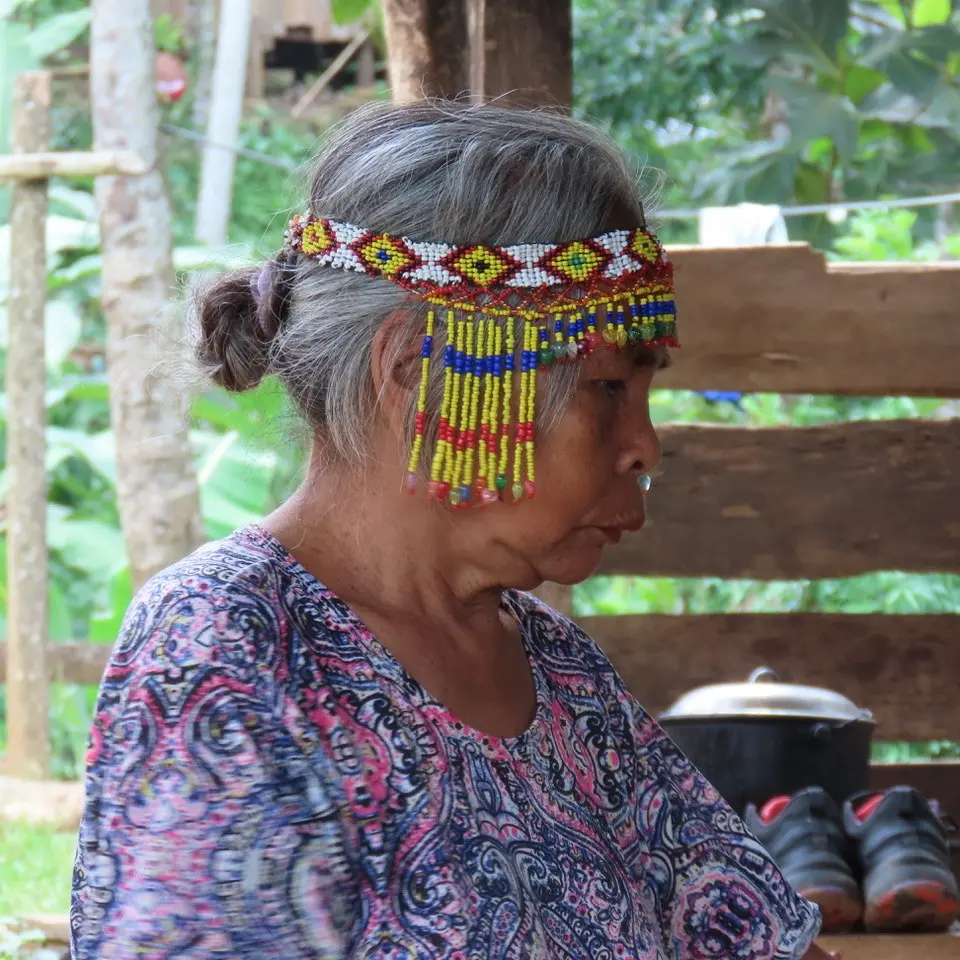
Upon arrival at the airport on Mindanao Island, we met Datu Lanelio T. Sangcoan, one of the Higa-onon tribe leaders and founder of Tribes and Natures Defenders, the organization hoping to partner with TiME to protect Mount Sagyaan. (Later, after meeting other Defender members, I learned that Datu is not his first name but a prefix that is added as an honorific.) Lanelio took us straight to his home (not the hotel!) to have dinner with his wife and kids. It was a wonderful — and delicious — gesture. His wife is not a member of the tribe local to Mount Sagyaan, but a Christian from the Seventh-day Adventist Church; they spoke with us about intermarriage: how on the one hand, it is important for peacekeeping among different groups of people in the Philippines, but on the other hand, it somewhat dilutes their connection to traditions.
Lanelio’s life is centered on integrating the tribal way of life with education and global outreach; he taught himself English, founded a tribal school and represents Philippine Indigenous groups internationally. He spends a week with his nuclear family and two weeks up in the mountain with his parents and siblings.
The next day, at 6 a.m., Lanelio picked us up from a nearby hotel and, after a two hours’ drive (driving in the Philippines was a bit unnerving — they pass slow trucks, cars and tuktuks on the right!), we arrived at his parents’ house and met a majestic couple with loving grandchildren all around them. It was Sunday so the kids weren’t at school, and instead spent the day with family. According to their tradition, men can marry as many wives as they want. In the case of Lanelio’s dad, Elaeldio, he married seven! This extended family, all with the same family name, is considered a clan. Elaeldio is a shaman.
Joined by Datu George, Datu Enrico and others, we descended down a steep trail to the Balato River, where the rainforest begins. At this point we were joined by a group of joyful kids carrying bags, which we later understood contained our lunch.
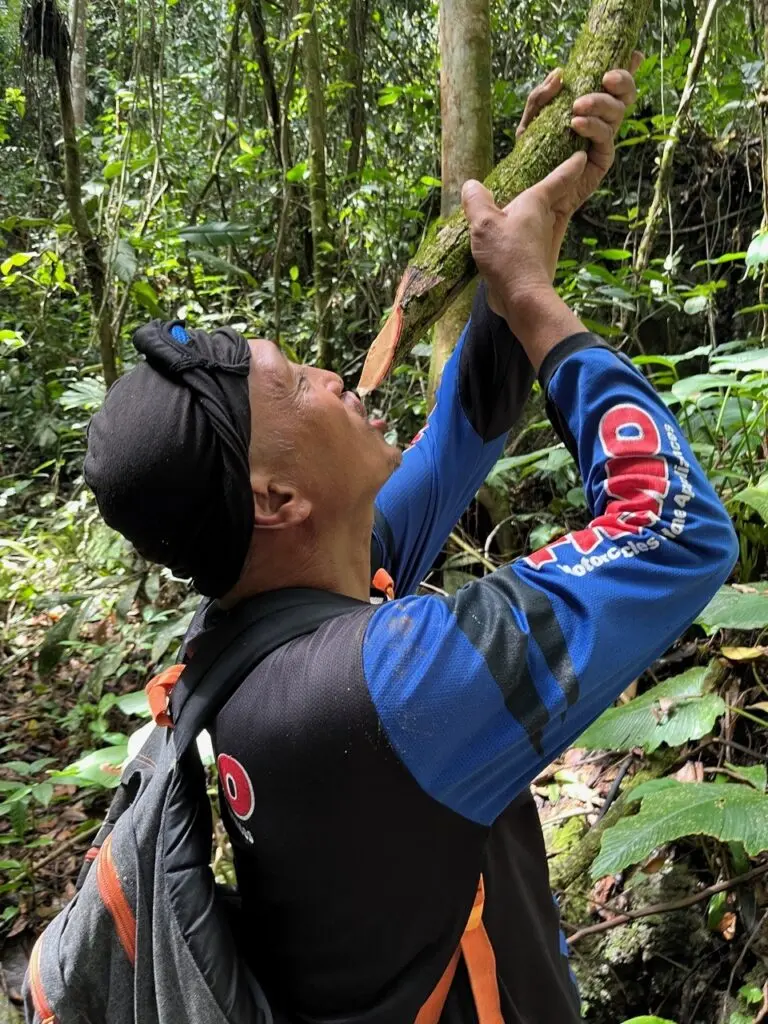
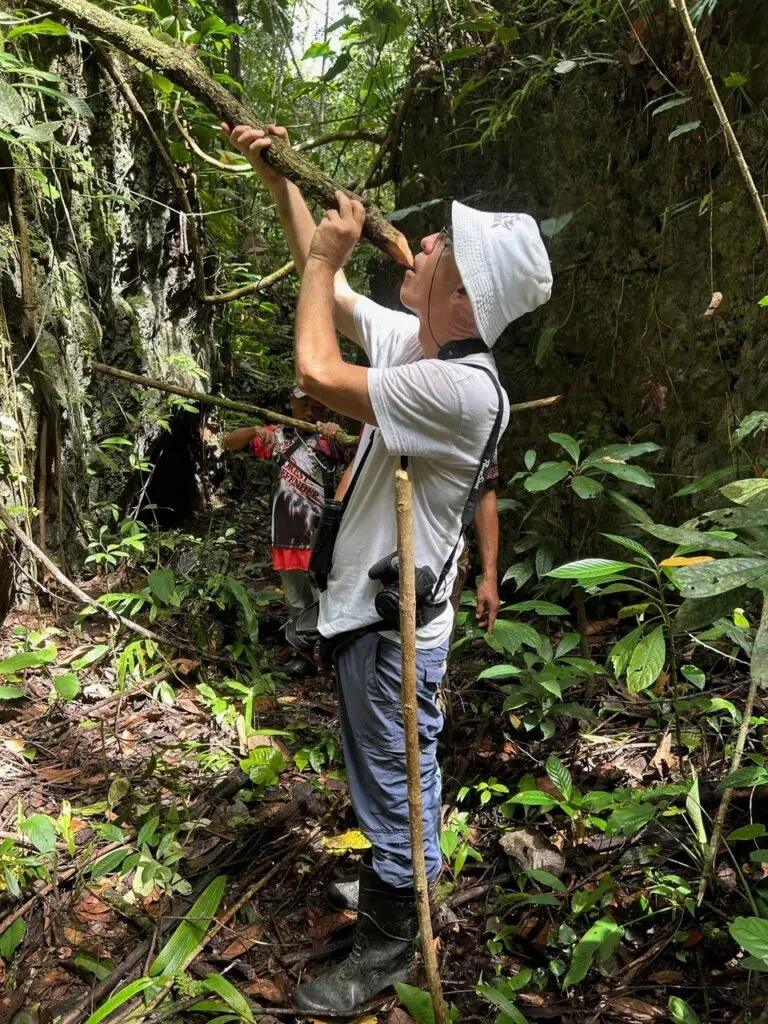
We also learned, upon crossing the river, that the Higa-onon tribe do not practice Western medicine at all. They showed us one tree, the Indian heliotrope, whose leaves are used to deal with cataracts. Rectal dysfunction is treated with the roots of Salawdaw tree, and the Tongaw tongaw is used for kidney failure. And so on and on we learned about the different trees and herbs and their uses. The forest is abundant in food, too: one of the great surprises was a vine that spills water when cut. They call it an energy drink, and a single branch contained so much water that I could barely drink the whole amount! We ate a Panoon fruit, a traditional tribal food and a kind of palm that they consider to be the food of Iguanas; when steamed, it tastes like cauliflower.
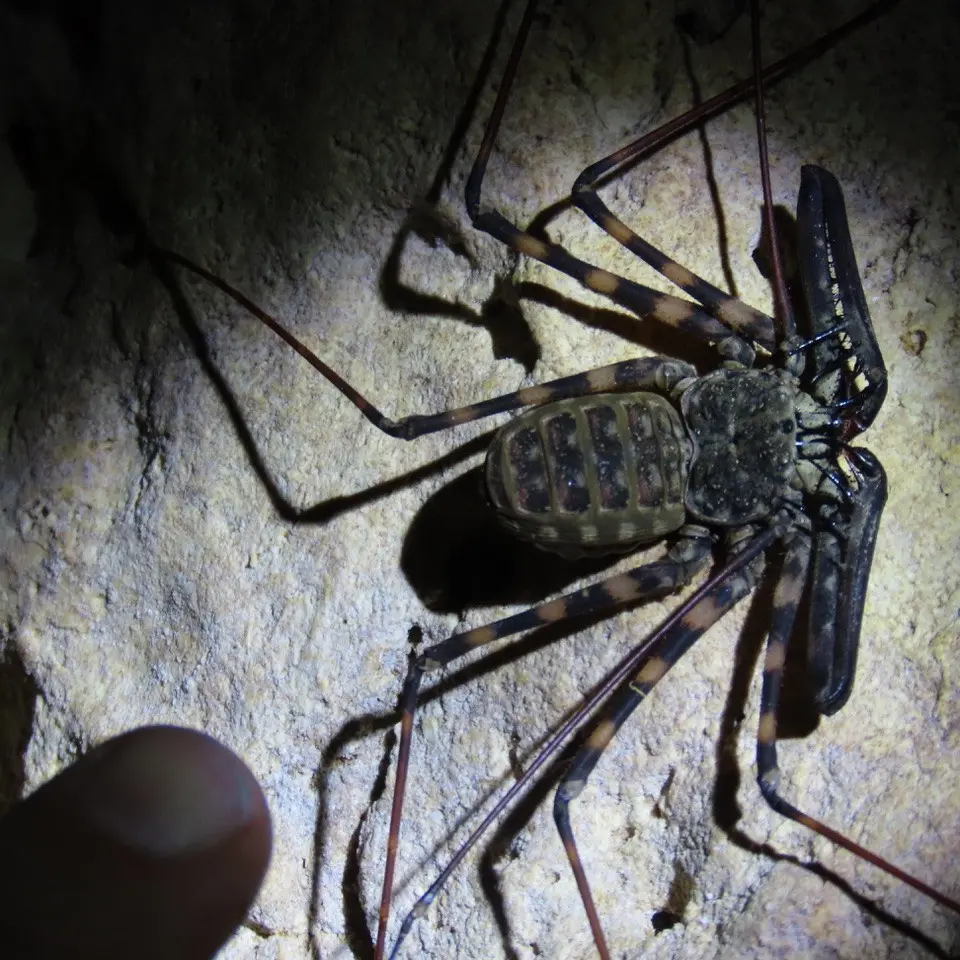
We entered a cave, one of a hundred caves in this mountain. The cave was occupied by bats and huge whip spiders, also called tailless whip scorpions (picture at the bottom of the article, avoid if you prefer not to see eight-legged wonders!). They are not in fact spiders or scorpions, but belong to a different order altogether. They are not dangerous to humans, so I dared to point my finger in front of my camera to appreciate their size. Within the cave, hanging from the top are swiftlet nests, which are a major ingredient in a soup considered a delicacy in the East. This nest harvesting has become unsustainable, and so we appreciate even more the desire of the tribe to save the forest and the caves within.
At midday, we took a break by a wonderful waterfall. The kids set out all the food on the rocks, and then ran to the waterfall before lunch. The food was traditional tribal food: taro root, fern, banana heart and casava, all cooked with coconut juice. When the boiled sweet potatoes were served, we gave up. We could barely move.
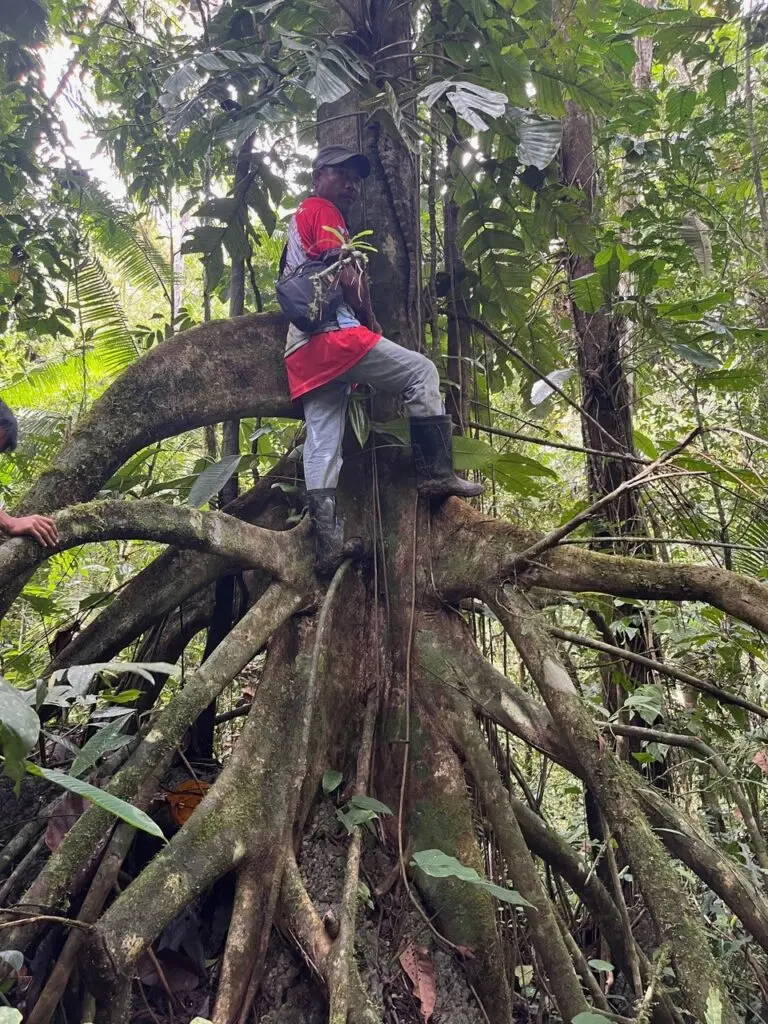
On the way back, we took a slightly different route and, to our surprise, on a challenging slope with boulders, one of the Defenders crafted a ladder on the spot. It was amazingly fast: Within couple of minutes a full five-step ladder was ready — made of course with local wood and roots. We passed by Lanelio’s mountain house. On the way up to Lanelio’s parents’ house via a very steep and strenuous trail, we took a break by a coconut tree. One of the Defenders climbed up the tree so quickly, I barely managed to take a picture. We sat nearby while they dropped the coconuts down, and then, with their big machetes, they opened the nuts for us to drink — so much juice that Irit and I, sharing one coconut, had more than enough. After that, we ate the delicious insides.
This amazing rainforest is threatened by mining (gold, copper, magnesium), logging, and unsustainable agricultural practices. The people of the tribe, and specifically the clan that established Tribes and Natures Defenders, want to protect the forest for future generations and for the well-being of all of us. TiME partnered with them after their application was reviewed by our scientific advisory committee, and now we need the help and faith of people from all around the world to save this land. Currently, the Higa-onon people protect it by living in it, defending the incredible wildlife and plants in the place. Our task is not one of charity, but of joining forces and allowing them to continue preserving this forest for us all and the world we live in. With a donation of only one dollar, you can vote on our website to protect one of three habitats: Los Magnolios and Pada Kera in Colombia, and Mount Sagyaan in the Philippines. Pada Kera is another place where Indigenous people want to save the land and live their traditional lifestyle.