As we approach the conclusion of TiME’s 2026 campaign, we wanted to highlight just a few of the incredible riches of biodiversity we aspire to save. We asked members of TiME’s Board a variation of the classic “what is your favorite animal” question: what is your favorite lesser-known species, and why?
We invite you to read their answers below and appreciate how much more vast biodiversity is than we tend to think; even common household names such as “frog” and “monkey” mask enormous diversity, and many species names are unknown to most nonspecialists. We all share the same planet, those species known and unknown alike, and we at TiME are committed to all life on Earth.
Tom Murtha
Member of TiME’s Board of Directors, senior adviser at Preventable Surprises, and lecturer at Columbia University’s Earth Institute Center for Environmental Sustainability, Tom chose two favorites to share with us:

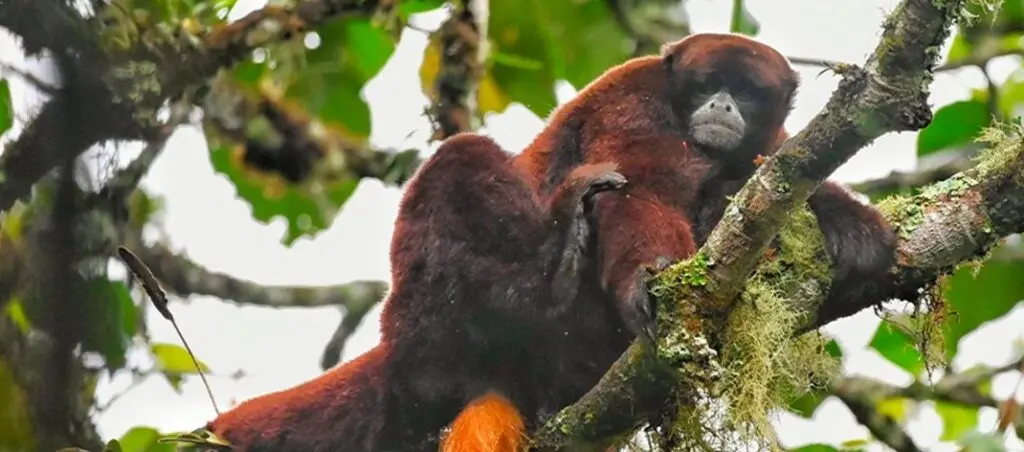
The Yellow-tailed Woolly Monkey is an important indicator species (a species whose population’s increase, decrease or migration can indicate the overall health of the habitat) and is stunning to see in the cloud forests of the Amazon. It is one of my favorites because it is a primate whose presence seems to serve as a protector of an incredibly beautiful ecosystem: in addition to distributing seeds, I view it as a sentinel of sorts sounding the alarm when an intruder is sensed — human or nonhuman. TiME has worked to preserve some of this monkey’s habitat and we should promote this important work and do more of it, in my opinion.
A few facts: One of South America’s largest primates, the Yellow-tailed Woolly Monkey lives in the montane cloud forests of Amazonas and San Martín in Peru. It is Critically Endangered and listed among the world’s 25 most-endangered primates. Clearing forest for cattle pasture, new roads into intact forest, and hunting are the main threats to its habitat and survival. Logging, mining, and climate change add pressure, and all are increasing. It was thought extinct, rediscovered only in 1926 and first filmed in the wild in 1983.
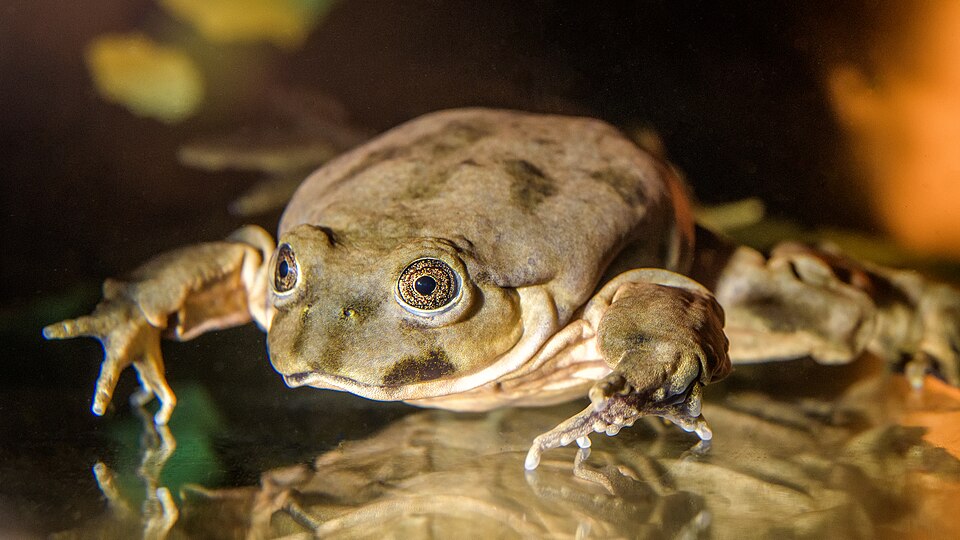
The Titicaca Water Frog is one of my favorite lesser-known endangered species because it is such a beautiful example of adaptation to higher altitudes and is also beautiful in appearance, in my opinion (with, of course, beauty being in the eye of the beholder). Most importantly, this frog is a key indicator species for the health of the mountain ecosystem, an area that should be pristine but is under threat from mining runoff. It is also a species that is sacred to the Q’ero, an Indigenous Quechua-speaking people living in the high Andes in Peru.
A bit more about this species: A large, fully aquatic frog found only in Lake Titicaca and its tributaries, nearly 4,000 m above sea level, the Titicaca Water Frog’s baggy skinfolds let it breathe underwater in the thin, cold air. The IUCN lists it as Critically Endangered after a decline of over 80 percent across three generations. Threats include harvesting for food and a supposed health tonic; introduced trout that eat its tadpoles; water extraction from the habitat; and pollution. In 2016, roughly 10,000 were found dead along a 30-mile stretch of the Coata River (a tributary of Lake Titicaca), with sewage and mining runoff suspected.
Clive G. Jones
Member of TiME’s Board of Directors, Emeritus Senior Scientist at the Cary Institute of Ecosystem Studies, elected fellow of the American Association for the Advancement of Science, Clive chose a multitalented species native to Tasmania as his favorite species:

My favorite lesser-known species is the Eastern Bettong, a truffle-loving, fungus-dispersing, soil-organic-matter-improving, water-infiltrating, fire-controlling, vegetation-diversity-promoting, landscape-restoring ecosystem engineer!
I got to see and learn about them in 2017 when I interacted with the conservation biologists who reintroduced them and were studying the effects of their reintroduction into their former range (where they became extinct in the 1920s). The species was initially reintroduced from relict populations in Tasmania into Mulligans Flat in 2012, a very large predator-free enclosure (ca. 1,300 ha) in eastern Australia, not far from Canberra.
Eastern Bettongs are very cool nocturnal-digging and day-nest-resting animals like small kangaroos that are hard to see because they hide in the day in the nests they build of bark and grass, and they can move very fast across the landscape at night or if disturbed from their nest during the day. They are very bouncy — reminiscent of baby Roo in Winnie-the-Pooh, even though they are a potoroidid (rat kangaroo), not a macropodid (true kangaroo).
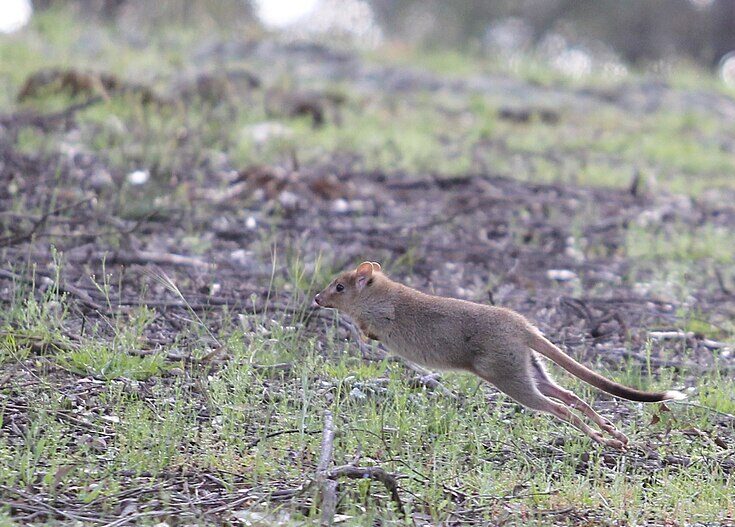
The hope is that the reintroduction of the bettong and other digging marsupials lost from large areas of Australia due to introduced predators and competitors (e.g., foxes, feral cats, rabbits) will help restore degraded ecosystems, in this case, box-gum grassy woodlands (a kind of eucalypt savannah). If that does not work then there will just be a very large number of holes dug in the soil! The pits Eastern Bettong dig for truffles trap water and organic matter, bury surficial litter that would otherwise burn, increase soil-organic-matter content and fertility, and create habitat for many plant species.
Darrell Erb Jr.
Member of the Board of Directors, educator and former executive director of the Tommy E. Short Charitable Foundation, Darrell identified the very rarely seen Humboldt Marten as his favorite lesser-known species.

My favorite lesser-known species is actually a subspecies of the Pacific Marten, the Humboldt Marten.
These animals live in the forest where I recreated throughout my youth.
I saw just one Humboldt Marten in all those years — just four years ago while kayaking down the wild and scenic Chetco River in Oregon. I was working through easy rapids close to the bank, and back in a shadowy recess between large boulders, right at river level, there it was! It did not startle, but sat on its haunches and stared at me as I paddled by.
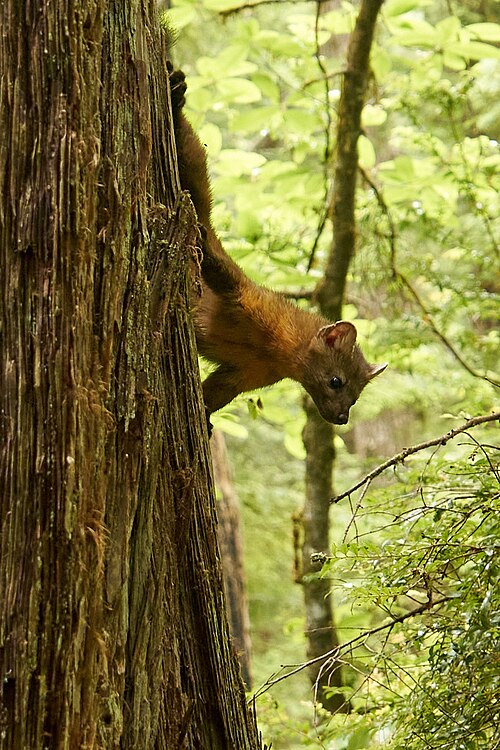
That two-second, very close encounter is emblazoned in my memory. The Humboldt Marten currently exists only in four isolated populations in coastal Oregon and coastal Northern California (see analysis by US Fish and Wildlife Service). They are so rare and hard to spot that they were thought extinct between 1942 and 1996.
Martens belong to the same family as skunks, badgers and weasels, but are not as well known and not a household name as much as the others (and their odor, unlike that of skunks, is barely perceptible to humans).
Olga Barbosa Prieto
Member of the Board of Directors, deputy director of the Institute of Ecology and Biodiversity (Chile); professor at Andrés Bello University, Olga shared two of her favorite species, both found in her native Chile.

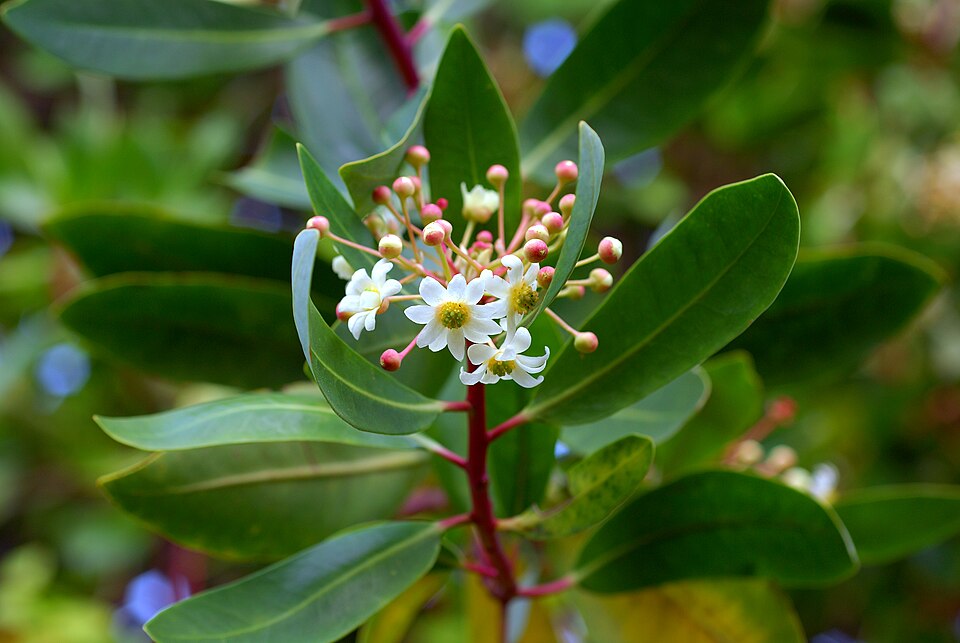
My favorite lesser-known species is Drimys winteri, the canelo or foye, a tree native to the temperate forests of southern Chile and neighboring Argentina. For the Mapuche people, it is the sacred tree, a symbol of peace, justice and goodness, which is planted beside the rewe (the ceremonial altar) and linked to the healing role of the machi (a traditional religious leader and healer). Its vitamin C–rich bark once protected sailors from scurvy, and it grows from Coquimbo to Cape Horn, from the semi-arid north to the subantarctic forests. To me it shows how a single species can hold ecological, cultural and spiritual value at once.
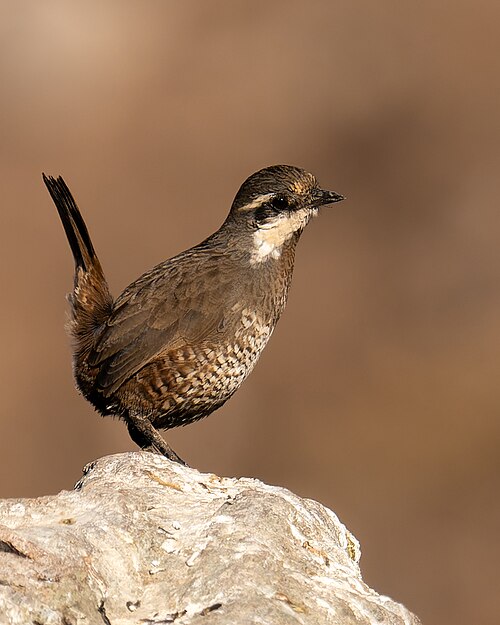
Another one of my favorite lesser-known species is the Moustached Turca (Pteroptochos megapodius), a bird found only on the scrubby hillsides and ravines of central Chile. A member of the Tapaculo family (Rhinocryptidae), found only in Central and South America and mostly in the Andes, it flies poorly and prefers to run along the ground, much like a North American roadrunner. This makes it very sensitive to habitat fragmentation. Often heard before it is seen, it calls with low, hooting songs, digs for insects and worms, and nests in burrows. Protecting the native scrub that shelters it is a simple, hopeful way to keep Chile’s endemic biodiversity singing for generations to come.